
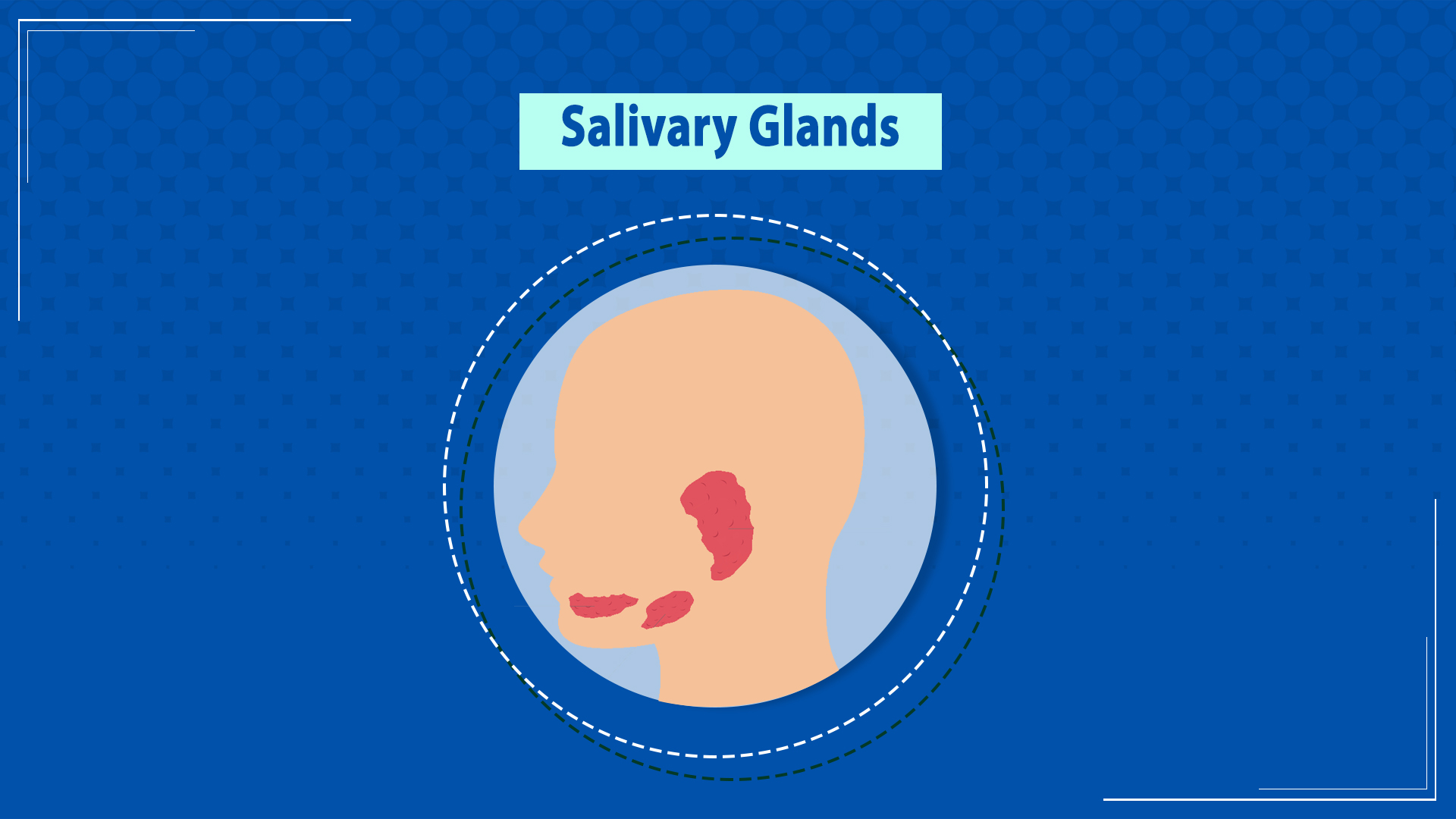
Salivary glands
Salivary gland tumors are the growth of abnormal cells (tumors) that begin in the salivary glands. Tumors of the salivary glands are distinguished by their rarity.
The salivary glands make saliva, which aids digestion, keeps the mouth moist and supports dental health. You have three pairs of major salivary glands under and behind the jaw, the parotid gland, the sublingual and the submandible. Many other small salivary glands are found in your lips, inside your cheeks, and throughout your mouth and throat.
Salivary gland tumors can also begin to appear in any of your salivary glands. Most are noncancerous (benign), but can sometimes be cancerous. Most salivary gland tumors appear in the parotid glands.
Salivary gland tumors are usually treated with surgery to remove the tumor. People with salivary gland cancers may need additional treatments.
Symptoms
Signs and symptoms of a salivary gland tumor may include:
- A lump or tumor near your jaw or in the neck or mouth
- Tingling sensation in part of your face
- Weakness of the muscles on one side of the face
- Persistent pain in the area of the salivary glands
- Difficulty swallowing
- Difficulty opening your mouth widely.
Causes
Tumors of the salivary glands are rare. The reason behind them is unclear.
Salivary gland tumors begin when certain cells in the salivary gland have changes (mutations) in the DNA of these cells. The cell's DNA contains instructions that guide the cell to what to do.
These changes direct cells to grow and divide quickly. Abnormal cells continue to grow while healthy cells may die. These accumulated cells form a tumor.
If additional changes occur in DNA, abnormal cells may become cancerous. Cancer cells can invade and destroy nearby tissues. They can also move away from the tumor and spread (metastatic cancer) to distant areas of the body.
Types of salivary gland tumors
Tumors of the salivary glands have several types. Doctors classify salivary gland tumors based on the type of cells affected by the tumors. Knowing the type of salivary gland tumor you have helps your doctor determine which treatment options are best for you.
Types of noncancerous (benign) salivary gland tumors include:
- Adenocarcinoma polymorphic
- Adenoma of basal cells
- Duct adenocarcinoma
- Tumor of products
- Tumor Warthin
Types of cancerous (malignant) salivary gland tumors include:
- Acular cell carcinoma
- Adenocarcinoma
- Adenoid cystic carcinoma
- Clear ocular cell carcinoma
- Mixed malignancy
- Epidermal mucinal carcinoma
- Germinal cell carcinoma
- Low-grade adenocarcinoma polymorphic
- Salivary duct carcinoma
- Squamous cell carcinoma
Risk factors
Factors that may increase your risk of salivary gland tumors include:
- Aging. Although salivary gland tumors can occur at any time, the incidence rates increase among older adults.
- Radiation exposure. Radiation treatments, such as radiation used to treat head and neck cancers, may increase the risk of salivary gland tumors.
- Exposure to certain substances in the workplace. Individuals who come into contact with certain substances may be more likely to develop salivary gland tumors. Functions associated with salivary gland tumors include those dealing with rubber manufacturing, asbestos mining and plumbing.
Read also about hiatal hernia
Read also about laparoscopic appendectomy
Read also about laparoscopic cholecystectomy
Read also about lymph nodes
Read also about removal breast polyps
Read also about removal cancerous tumors breast
Read also about breast augmentation and reduction
Read also about thyroid glands


